After Fortinet acquired Panopta, a Chicago-based monitoring startup, the product needed to evolve from a niche monitoring solution into a scalable platform that could integrate seamlessly with the broader Fortinet ecosystem. I led the information architecture redesign to improve scalability, streamline navigation, and align the user experience with Fortinet’s design standards.

FortiMonitor – Network & Infrastructure Monitoring
From Startup to Scale: Revamping Panopta for Scalable Adoption
Redesigning Panopta’s information architecture and user experience to scale within Fortinet’s ecosystem.
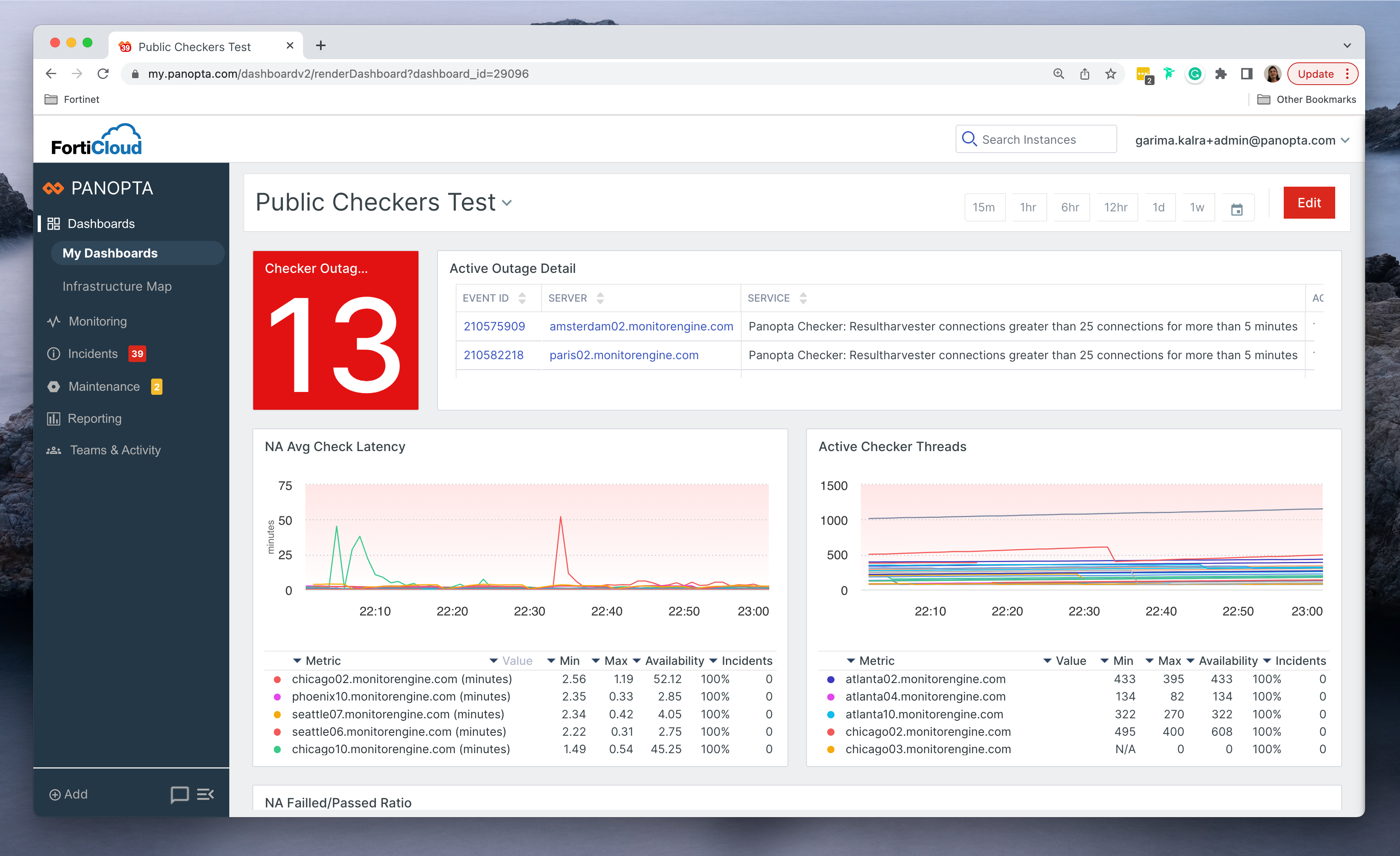
After Redesign
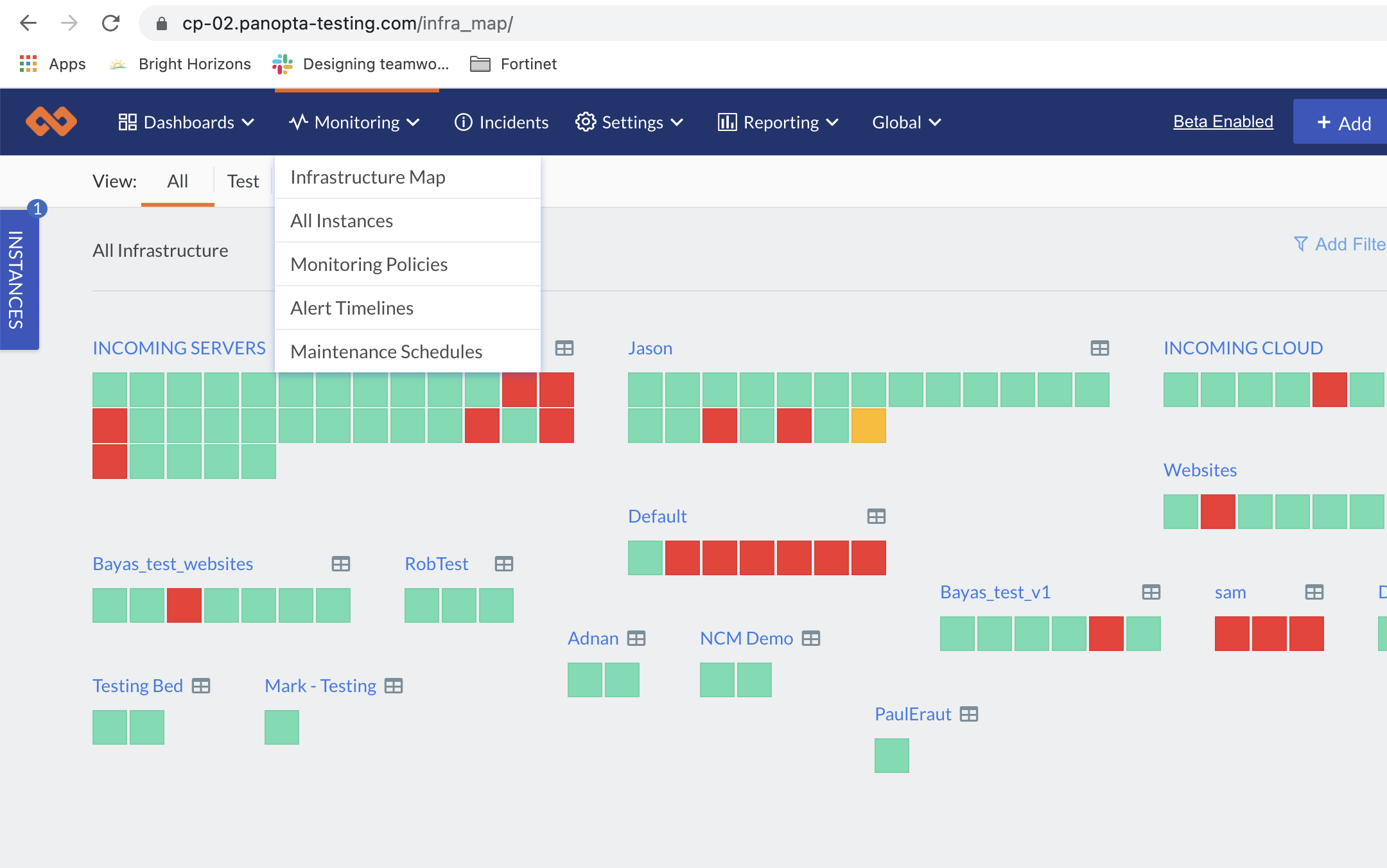
Before Redesign
Background
Impact
- Simplified and scalable information architecture, validated with customers.
- Unified experience by adopting Neutrino, Fortinet’s design system.
- 100% integration with FortiCloud IAM, enabling seamless cross-product access.
- Set the foundation for enterprise adoption and scalability of FortiMonitor.
Role
Sr. User Experience Designer
Team
Director of Engineering, Sr. Product Manager, Sr. Backend Dev, Sr. Frontend Dev
About Product
Panopta, now called FortiMonitor, is Fortinet’s cloud-based infrastructure and network monitoring platform. It provides unified visibility across servers, networks, containers, and applications, helping enterprises detect and resolve performance issues before they impact customers.
My challenge: simplify a technically complex system into an intuitive, scalable experience that could support Fortinet’s growing enterprise customer base.
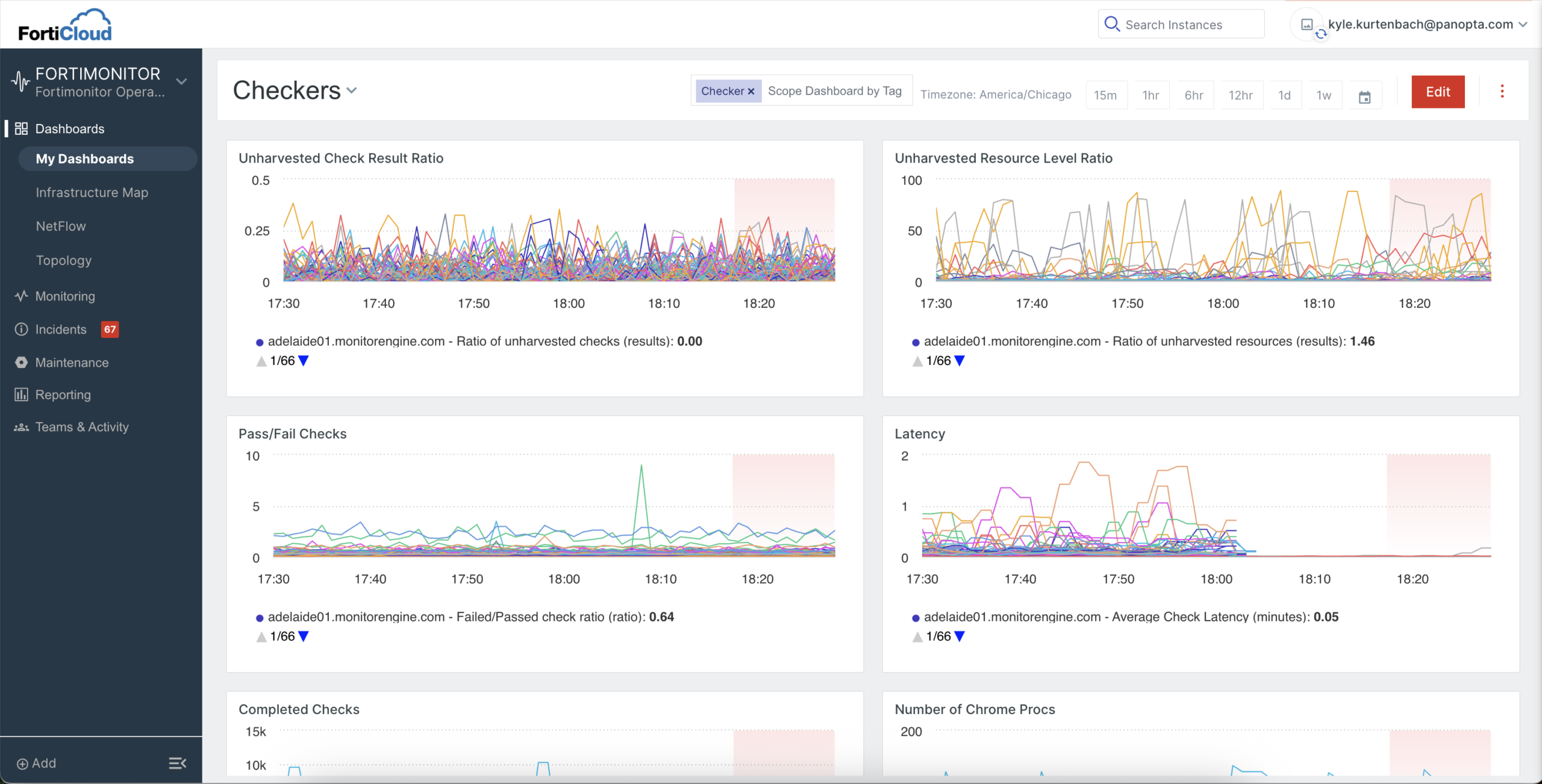
Current Screenshot - FortiMonitor
Discovery & Research
As the sole designer, I began by immersing myself in both organizational and customer perspectives.
-
Listening tours: I met with engineering, product, sales, and customer success teams to understand pain points and expectations.
-
Cross-product research: Partnered with PMs across Fortinet products to learn from their post-acquisition integration experiences.
-
Customer interviews: Conducted sessions to uncover what worked in Panopta and where users struggled.
Key Findings:
-
Strong need to integrate seamlessly with Fortinet’s ecosystem (design system, IAM, and Fabric).
-
Users struggled with findability: long menus and cluttered pages made navigation frustrating.
-
Internal teams also faced challenges in using and supporting the platform.
-
Early post-acquisition meant ambiguity in ownership and decision-making, requiring strong facilitation.
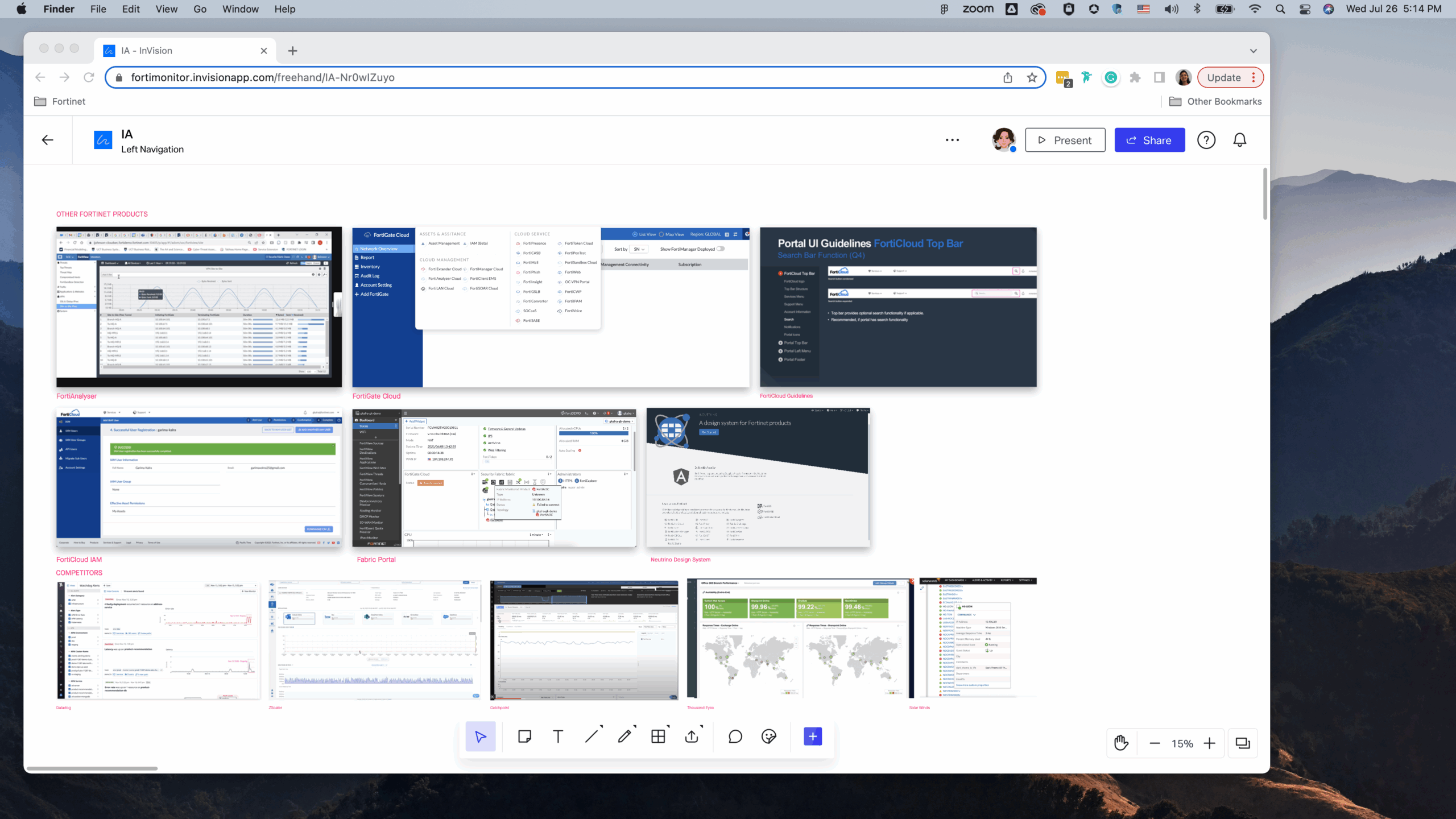
Information Gathering from listening tours -
other Fortinet products and competitor products
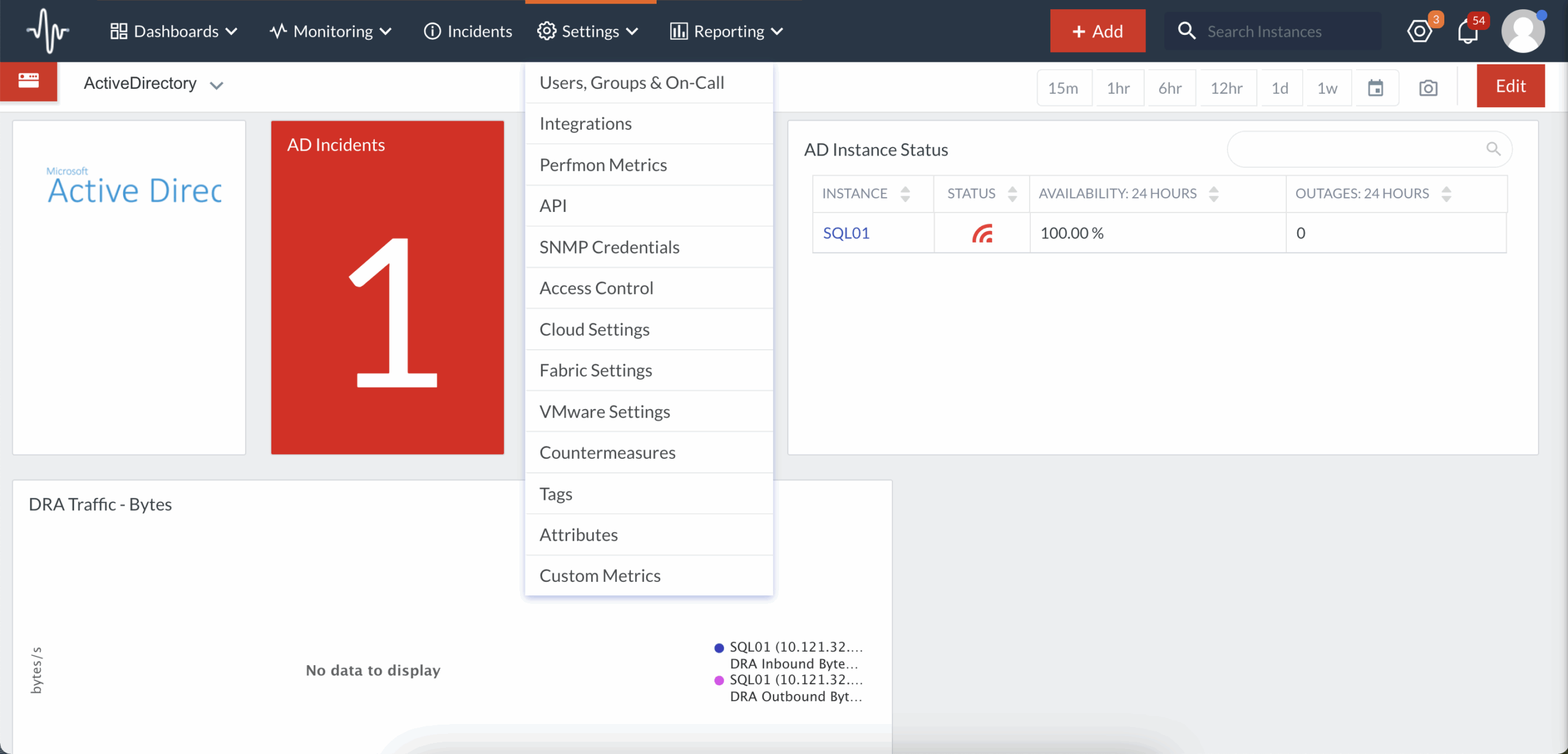
One of the menus from old navigation
To align stakeholders, I facilitated discovery and prioritization workshops, breaking the redesign into clear phases:
-
Apply Fortinet branding via Neutrino design system.
-
Redesign the Information Architecture.
-
Integrate with FortiCloud IAM.
-
Plan for Fabric integration.
Information Architecture Redesign
The first priority was navigation. Using insights from research, I created a research plan to re-architect the IA.
-
Card Sorting: Conducted sessions with both customers and cross-functional teams. Results showed that ~70% of users grouped items by objective (e.g., Learn, Act) rather than product modules.
-
Tree Testing: Ran a round of validation to measure task findability in the new structure. This confirmed key improvements and highlighted areas for adjustment.
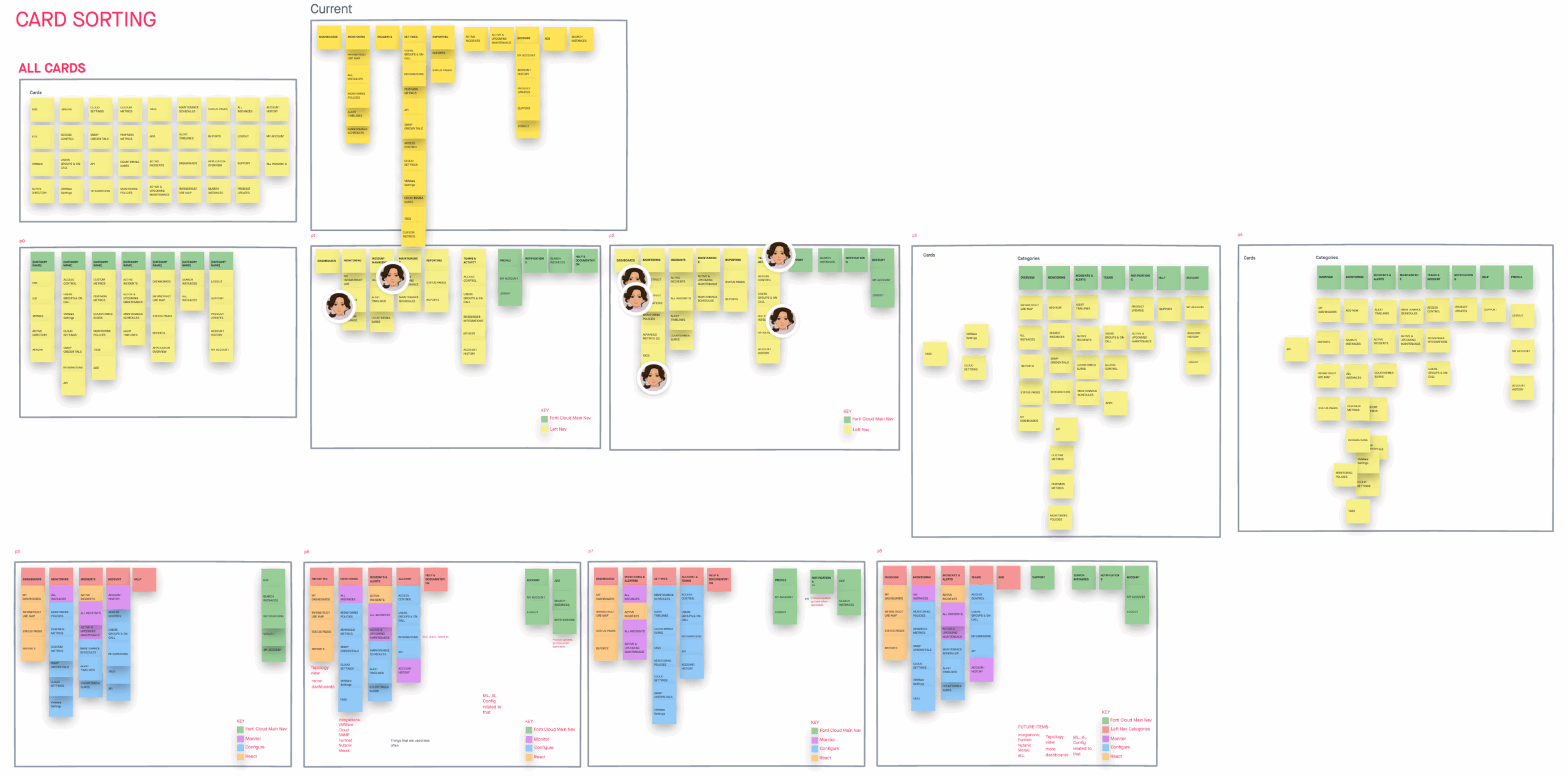
Snapshot from Card Sorting Exercise
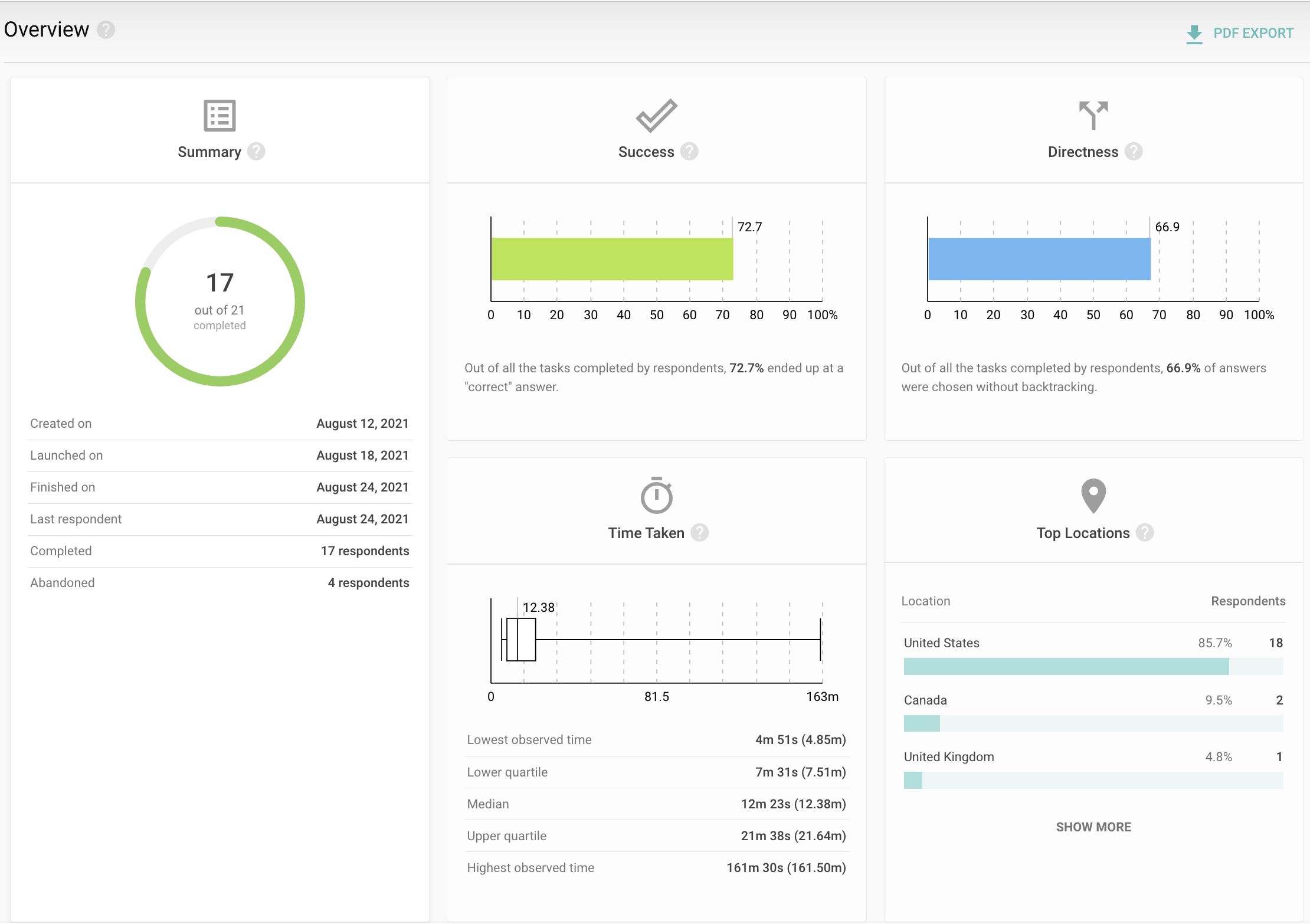
Tree Testing Result Dashboard
Result: A new menu structure that simplified navigation, reduced redundancy, and made frequent tasks easier to complete.
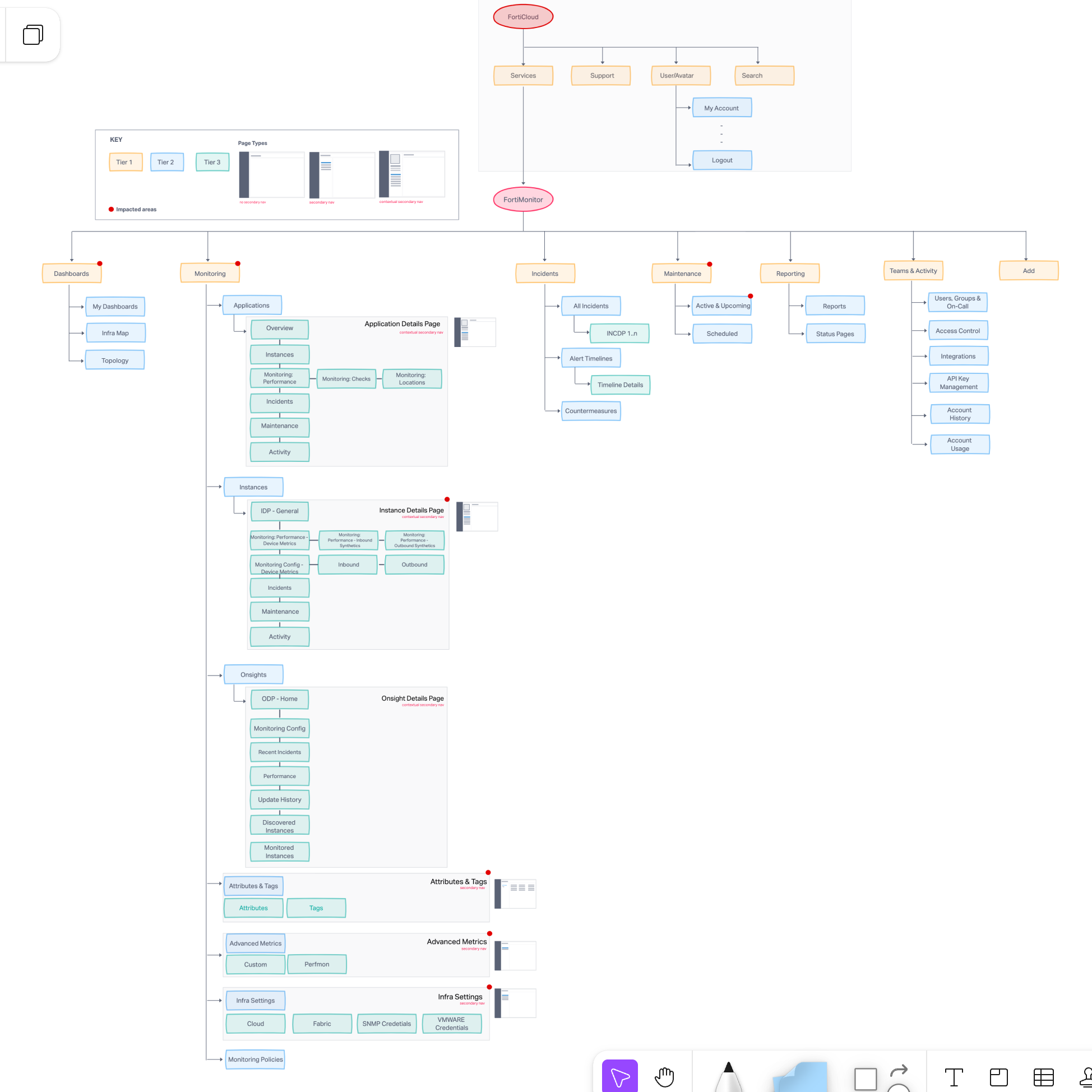
Revised IA
Design Iterations
To help the team visualize the impact of these changes:
-
Began with sketches and low-fidelity wireframes.
-
Iterated into mid-fidelity prototypes, exploring both primary and secondary navigation patterns.
-
Shared weekly updates with engineering and product to align design decisions with technical feasibility.
The biggest challenge was balancing navigation redesign with future scalability, ensuring we weren’t just solving for today but also enabling growth.
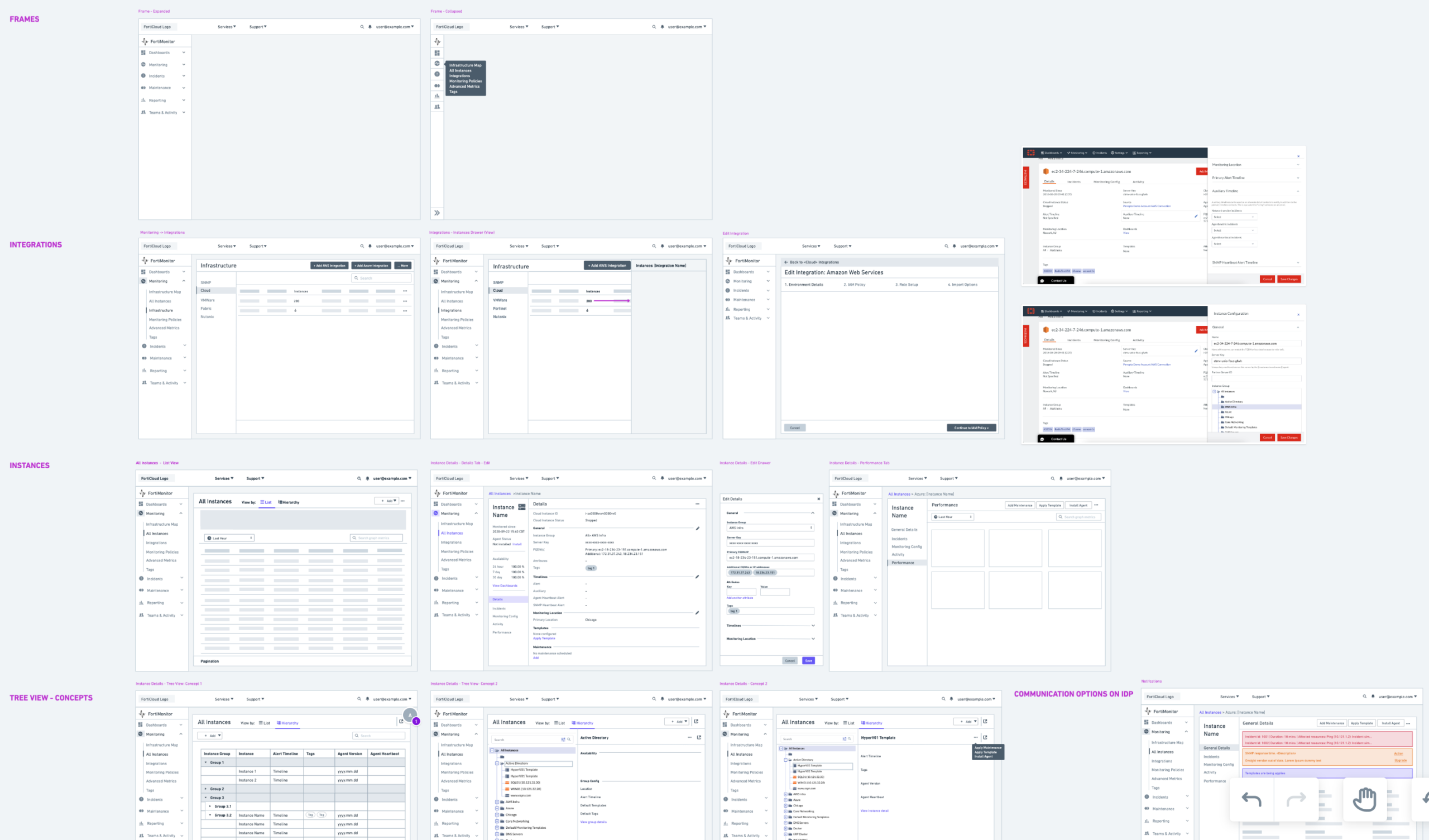
Lo-Fi's
Validation
Before finalizing, I embedded a usability testing widget directly inside FortiMonitor to recruit customers. This allowed users to test the new navigation at their convenience, giving us broader and more representative feedback.
The usability tests focused on:
-
Task findability in the redesigned IA.
-
Language and labels for clarity.
-
Layout and hierarchy of the new dashboard.
Iterating on this feedback ensured that the final design reflected real user needs, not just internal assumptions.
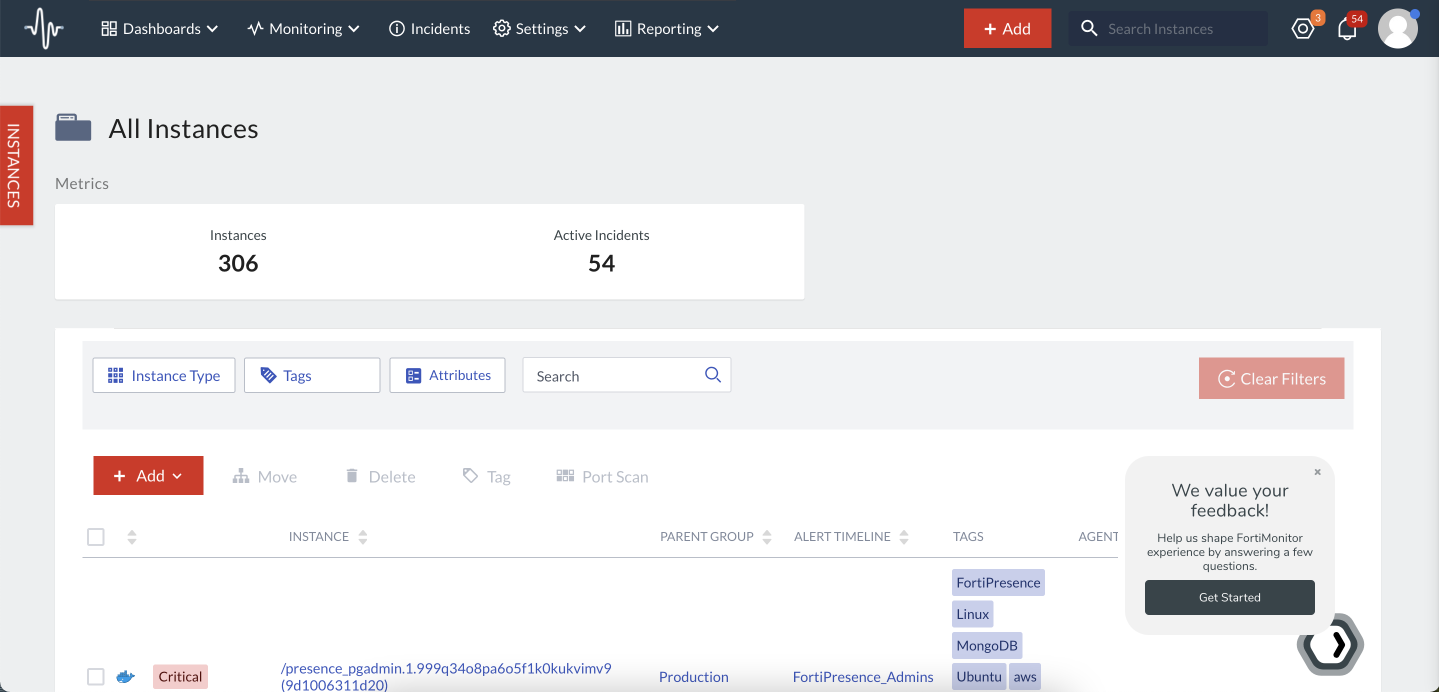
Usability testing widget embedded in production env.
Execution
With the IA finalized, I partnered closely with six front-end engineers and their manager to deliver the redesigned experience. My contributions included:
-
Providing design specifications and reviewing builds.
-
Designing an in-app announcement and guided walkthrough (via Pendo) to onboard users to the new experience.
-
Supporting QA to ensure consistency with Neutrino design system.
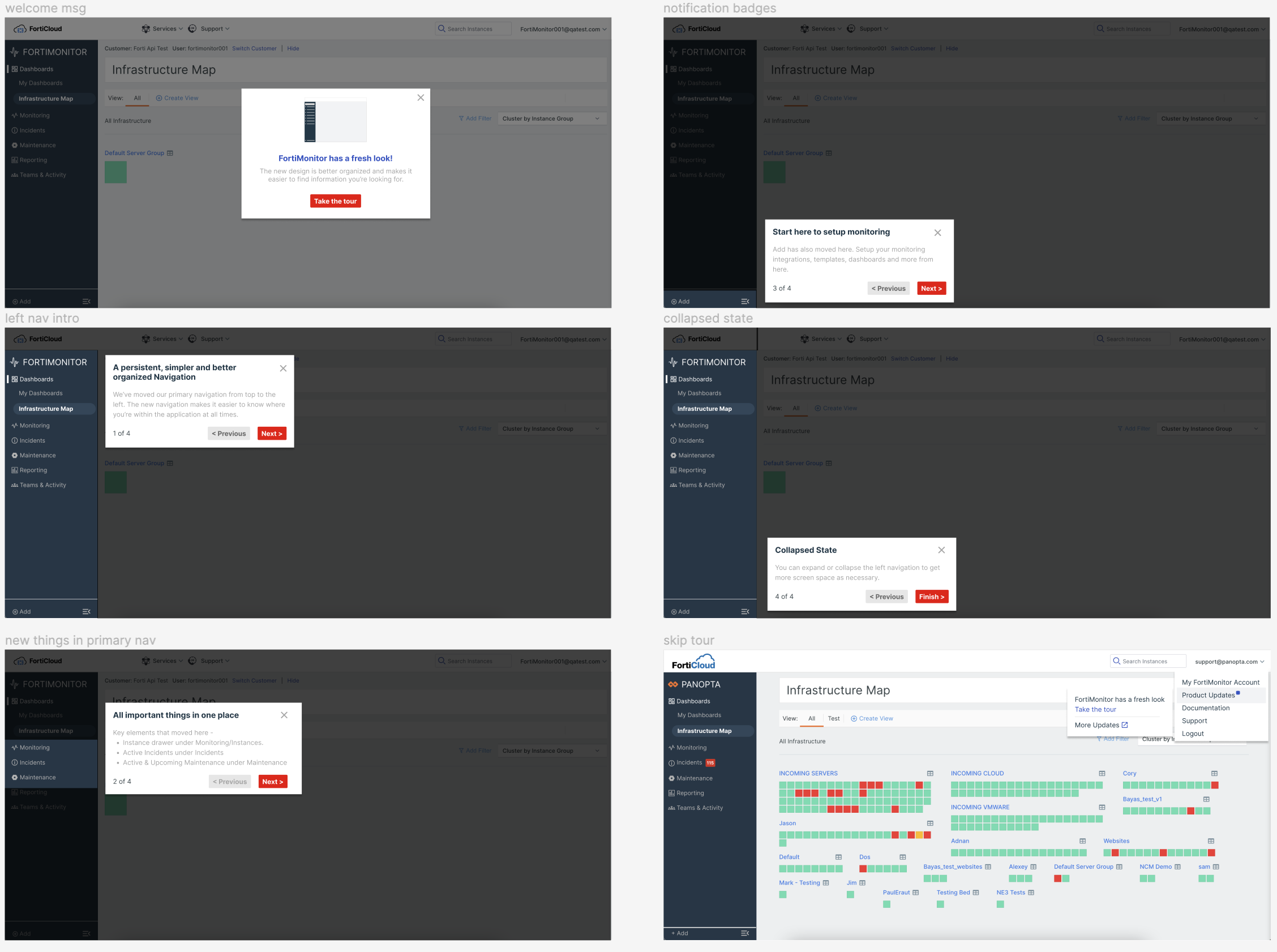
In-app announcement - guided walkthrough ui's
Outcomes & impact
The redesign delivered significant improvements:
-
Simplified navigation made it easier for users to complete frequent tasks, validated by tree testing and usability studies.
-
Consistent design system adoption reduced cognitive load and aligned FortiMonitor with Fortinet’s portfolio.
-
IAM integration streamlined login and access, a critical step for cross-product adoption.
-
The redesign laid the groundwork for enterprise scalability and faster integration of new features.
Most importantly, this project demonstrated how thoughtful IA and design leadership can turn a post-acquisition product into a scalable, enterprise-ready platform.
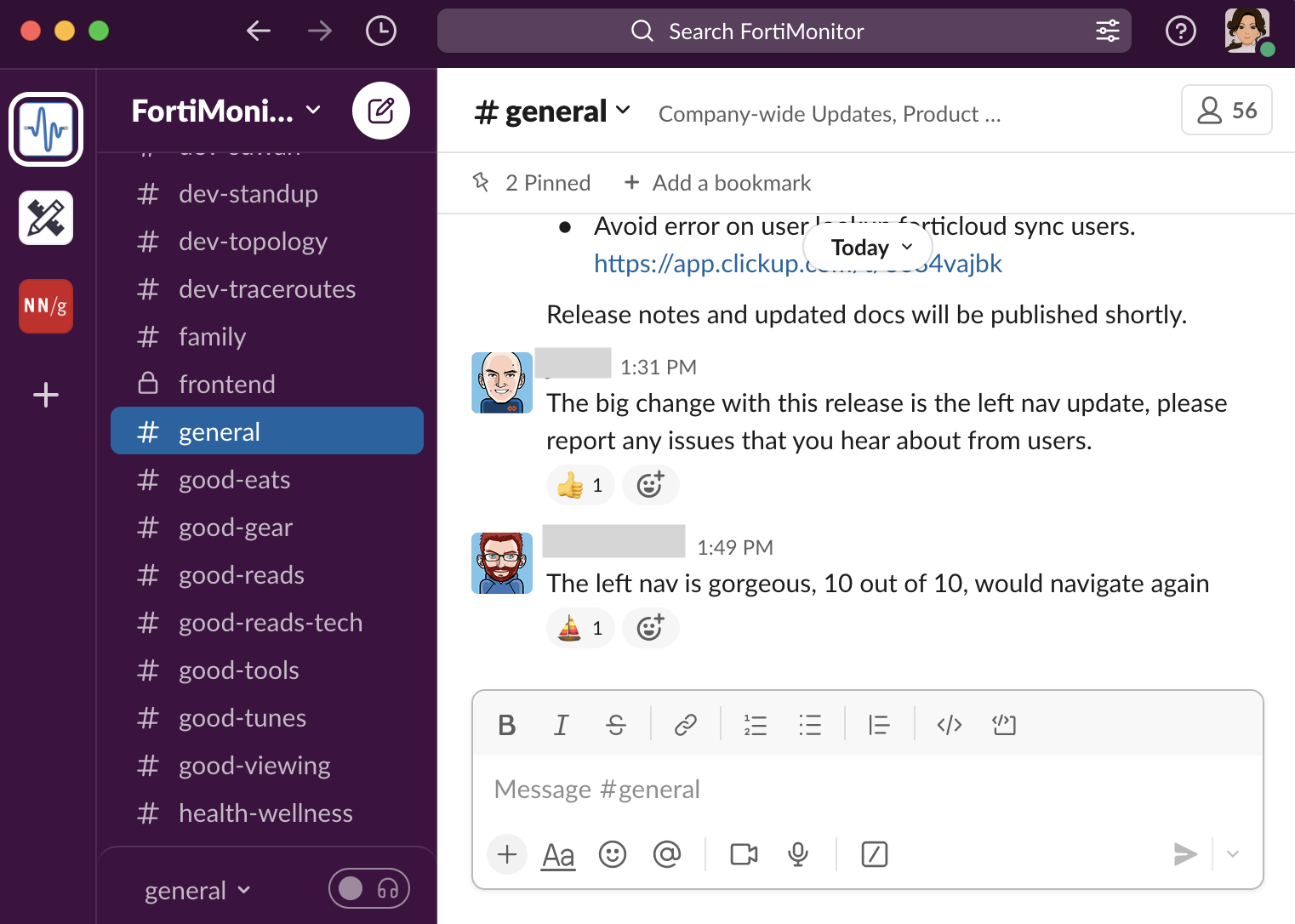
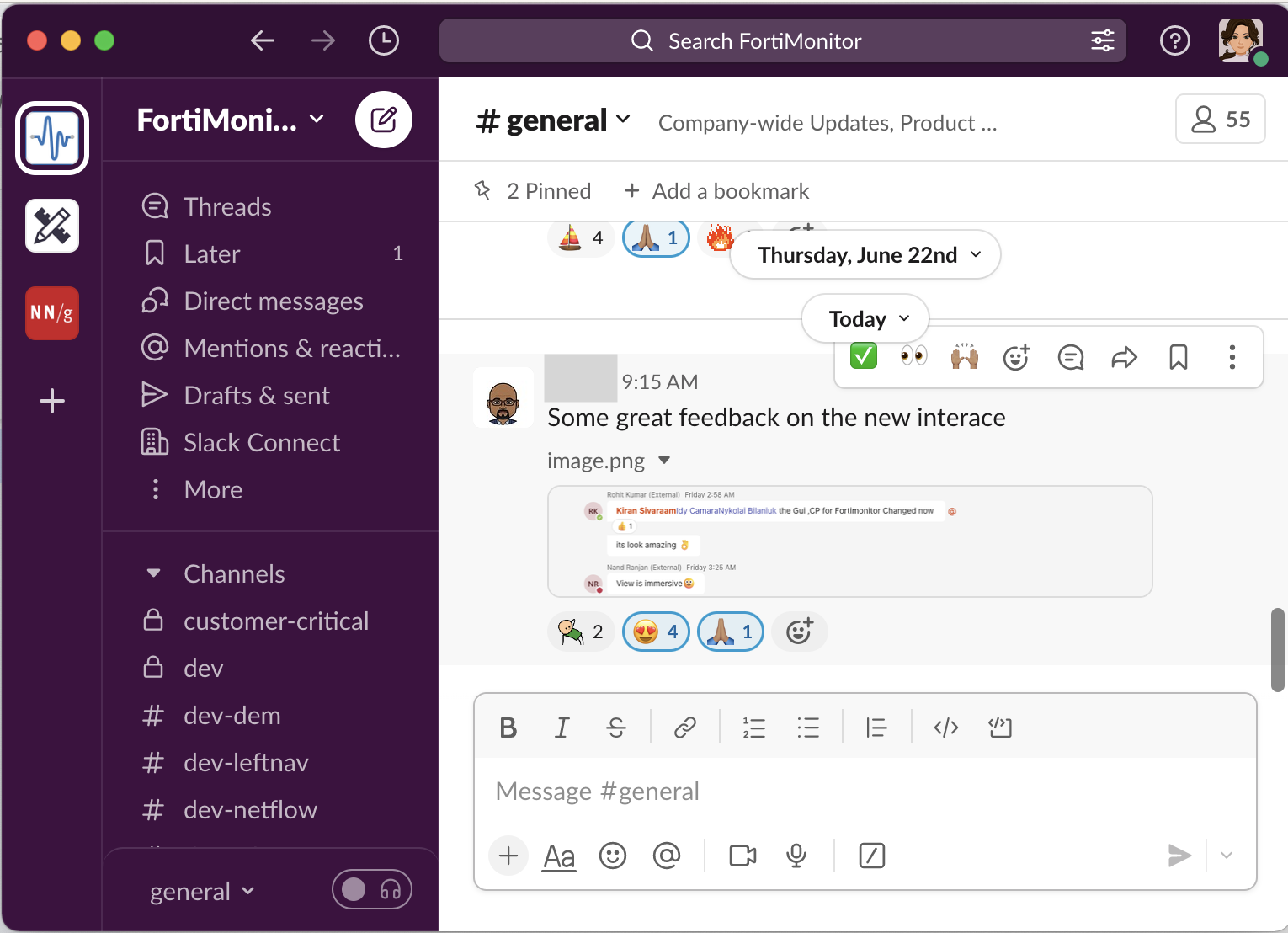
Customer Feedback